

Cargo · June 3, 2026
Proof of Delivery (PoD): How to Prevent Shipping Disputes
Proof of Delivery (PoD) ensures goods are received in real-time in the supply chain and logistics. Learn the definition and benefits of e-PoD to avoid shipping disputes, accelerate claims, and improve business efficiency.
When you send goods via cargo, logistics, or shipping services, you will be asked to ensure that there are no operational issues related to the shipment.
Operational issues in shipping can lead to financial losses or even loss of customer trust, especially if you are a vendor who must send important goods for your business.
For this reason, you need strong proof that guarantees goods reach the recipient correctly and clear travel documentation.
For this reason, logistics, cargo, and shipping service providers usually provide proof in the form of shipping documents so you can ensure goods arrive safely at their destination, even if an error occurs such as damaged goods, late delivery, and so on.
You, as both sender and receiver, can perform tracking to determine where the shipping error occurred.
This article will discuss everything you need to address the above issues, starting from the explanation of Proof of Delivery (PoD), why Proof of Delivery (PoD) is important for business, and how to ensure that the Proof of Delivery (PoD) document is correct.
What is Proof of Delivery (PoD)

Image source: Freepik
Proof of delivery (PoD) is a document that serves as a receipt for shipment. This document will serve as proof that the recipient has received the goods safely.
Simply put, this is proof that can be used when the recipient wants to return goods, or file a claim if damage occurs during shipping.
This is also similar to an article from Super International Shipping which states that in the logistics field, Proof of Delivery or abbreviated as PoD is a document or can also be a digital confirmation issued by the shipping company to the recipient.
How Proof of Delivery (PoD) Works

Image source: Freepik
Shipping Goods: When goods are shipped, shipping-related information is recorded, including details of sender, recipient, destination address, and description of goods.
PoD Documentation: After goods are shipped, a PoD document is created. This can be in the form of a physical or electronic (e-PoD) document that includes:
- Date and time of delivery.
- Name and signature of recipient.
- Quantity and description of goods received.
- Recipient Signature
The recipient signs the document as proof that they have received the goods in good condition.
In e-PoD, the signature can be done digitally using a smartphone or laptop.
Recording and Tracking: Information from the PoD is recorded in the logistics management system to facilitate real-time tracking of shipping status. This provides transparency to the sender and recipient regarding the shipping process.
Read about Bill of Landing (BoL) in shipping and cargo logistics for companies
Why is Proof of Delivery (PoD) Important?
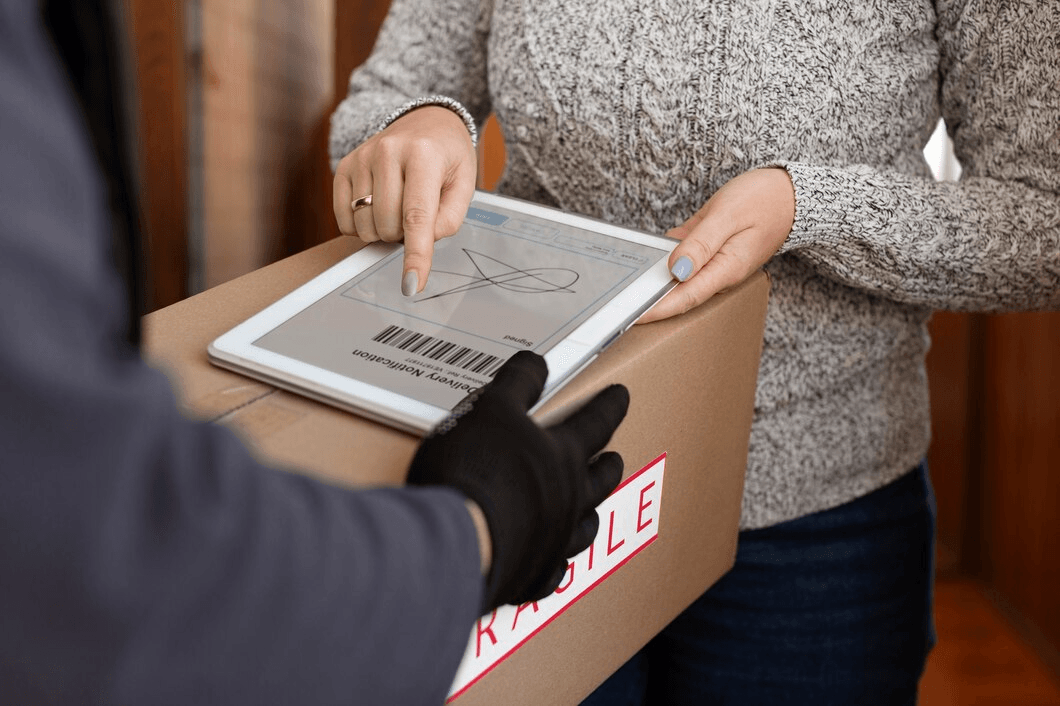
Image source: Freepik
Certainly, Proof of Delivery (PoD) is very important for shipping, especially for large shipments between cities, between islands, and even between countries.
If you send goods without Proof of Delivery (PoD), this is very high risk, because there is no clear tracking of your goods during shipping.
According to Ubet Shipping, PoD (Proof of Delivery) is a basic term in international sales and logistics. They refer to it as a core term. This is because PoD not only functions as a receipt that goods have been received by the recipient, but can also be a legal document proving that the delivery has been successfully completed.
We will elaborate on why shipping needs clear Proof of Delivery (PoD)
Reducing Risk of Loss & Damage of Goods
Proof of Delivery (PoD) will be written evidence if you use paper, or digital evidence that goods have been safely received by the recipient.
If damage occurs or goods are missing, then Proof of Delivery (PoD) can be valid proof to file a claim.
Ensuring Transparency & Accountability
In shipping, whether logistics or cargo, there are certainly many parties involved and responsible in the shipping process starting from (the sender, shipping service company, warehouse, courier, to recipient)
In many cases, the recipient of goods is not the person who purchased the goods. This often happens when you send goods for a company, supply chain B2B, international trade, and large-scale logistics, where goods are sent to a warehouse, distributor, or third party before finally reaching the end user.
For example in a shipment of goods for a large company:
- The purchasing department will communicate with the vendor for the purchase
- The vendor then ships goods with the help of the nearest and most trusted expedition, cargo, or logistics service
- Goods will be shipped by a trusted third party like ABC Express
- After goods are shipped safely to the recipient, it is possible that the purchasing department who made the transaction is not the person receiving it; goods will be stored in the warehouse.
- When in the recipient company's warehouse, only then will the purchasing department or end user see the newly shipped goods.
From such a simple case example, it can already be imagined that without clear proof of delivery (PoD), disputes can occur both internally within the company and with the vendor.
Cases can occur such as the warehouse claiming they have not received the goods, but the vendor and sender already feel they have shipped.
Proof of Delivery (PoD) ensures every stage is recorded, from vendor shipment to warehouse to goods received by the end user, so the logistics process is more transparent and accountable.
Read more about Definition of Shipping and Examples
Improving Operational Efficiency
Nowadays, proof of shipment is not only in paper form but can also be in the form of Electronic Proof of Delivery (e-PoD), which also makes all parties more efficient in operations.
Starting from not needing physical signatures anymore, you can get digital signatures.
All data is automatically saved to the system, so you don't need to do manual input and Proof of Delivery (PoD) is safer compared to using paper.
The cargo company can perform tracking in real-time and update shipping status to the sender and receiver via shipment tracking.
Example Implementation of Proof of Delivery (PoD) for Large Shipments

Image source: Freepik
Proof of Delivery (PoD) for Textile Shipment from Solo to Garment Factory in Jakarta
A textile company in Solo regularly sends rolls of premium fabric to a garment factory around Jakarta, which will be produced into high-quality clothing that will even be exported internationally.
However, they often experience problems such as lost goods, fabric that is rejected in shipment or sometimes the quantity does not match between what is sent and received.
If shipment is done without a digital Proof of Delivery (PoD) system, it can be difficult to prove goods were lost in transit or errors occurred in the receiving warehouse recording.
With electronic Proof of Delivery (e-PoD), each shipment can be documented with:
- Photo of goods when entering the delivery truck
- GPS tracking and time goods arrive at the factory
- Digital signature from the warehouse manager
When a stock shortage report occurs, the logistics team immediately checks the e-PoD and finds that goods were complete upon arrival at the factory. The problem turned out to be in the warehouse storage process, not in the shipment. With digital PoD, the claims process is faster and more accurate, avoiding conflicts between suppliers and factories.
Read more: Cheapest Solo Cargo Expedition Service for long-distance shipments to remote areas (2025)
Proof of Delivery (PoD) for Government Goods Shipment for IKN Project
A government procurement vendor wins a contract to ship electronic equipment and communication infrastructure to a development project in the Nusantara Capital City (IKN).
Because this project is worth billions of rupiah and involves many parties, every shipment must be ensured to arrive on time and be received by authorized officials.
Previously, shipments were made with manual signatures, making it difficult to track when and where goods arrived. In some cases, PoD documents were lost or not filled in correctly, causing delays in payment and potential late penalties.
After implementing e-PoD, each shipment now has:
- Digital documentation with unique barcode for each item
- Digital signature of project officials as proof of delivery
- Photo of goods condition when received to avoid damage disputes
With this system, the vendor can prove that goods were shipped according to the contract, and the payment process can be accelerated without administrative obstacles.
Conclusion
Proof of Delivery (PoD) is a very important factor in supply chain and logistics, especially for B2B shipping and companies that handle large-scale and regular shipments.
Some examples of shipments from the textile industry, manufacturing, to procurement of goods for the state are examples of how Proof of Delivery (PoD) greatly helps to ensure goods are received by the right party, in the correct quantity, and in good condition.
Using Electronic Proof of Delivery (e-PoD) also allows all parties involved to perform tracking in real-time, with accurate documentation, and makes claims easier.
With this system, businesses can reduce shipping disputes, improve operational efficiency, and build trust with their business partners.
Although you also need to ensure goods are shipped by logistics and cargo companies that are already trusted. One of the best ways is to choose a shipping company that has a digital Proof of Delivery (PoD) system to ensure transparency and accuracy of shipment.
If you are looking for a shipping service with real-time tracking features and complete e-PoD documentation, contact ABC Express for safer and more efficient shipping solutions.