
Cargo · June 3, 2026
What Is Freight Forwarding: Definition, Types, and Examples
This article explains freight forwarding, the types of freight forwarding services, the differences between freight forwarders, couriers, and logistics providers, and examples of freight forwarding services suited to your company's shipping needs.
Freight forwarding is a term deeply embedded in the delivery and shipping industry. If you have ever shipped goods — whether for retail purchases through an e-commerce platform or for your company's business shipments — then freight forwarding is a term you have certainly come across.
When you ship goods, there is a company whose sole focus is to transport those goods from origin to destination. That company is known as a freight forwarder.
Freight forwarding companies are critically important, especially as the trend of online shopping continues to grow — not only at the individual level but also for business-to-business shipments.
When you ship as an individual, finding the right freight service is relatively straightforward. However, if you are looking for a company to handle your business shipments, finding the nearest freight forwarder capable of long-distance delivery at competitive rates becomes essential.
That is why this article covers the essence of freight forwarding itself — its advantages and variations — so you can make an informed decision when choosing the right service for your shipments.
The Definition of Freight Forwarding in Logistics
Image: Freepik
First, referring to the KBBI (Indonesian Dictionary), freight forwarding is defined as the activity of dispatching letters, goods, and other items — or it can also refer to a business entity engaged in the transportation of goods.
Wikipedia offers a broader perspective on the term:
Freight forwarding can refer to: A journey undertaken for a specific purpose, usually exploration and/or research — hence terms such as a nature expedition or a historical expedition.
However, it also provides the context of cargo forwarding, meaning a journey undertaken with the purpose of delivering goods.
Based on both definitions, we can conclude that a freight forwarder is a business entity operating in the cargo delivery and logistics sector, ensuring goods reach their designated destination.
The destination may be far from the point of origin, although not all freight forwarders have nationwide coverage across Indonesia.
When you use a freight forwarding service, rates will vary. This depends heavily on the distance and the weight of the goods your company is shipping.
Generally, the greater the distance and the heavier the shipment, the higher the shipping cost.
A freight forwarding company provides cargo delivery services, ranging from small parcels to large-volume shipments. Goods can be transported via land, sea, or air, depending on the requirements and destination of the shipment.
As an example, ABC Express operates across all of Indonesia and provides cargo services for businesses that require large-volume shipments to cities throughout the country.
How Freight Forwarding Works
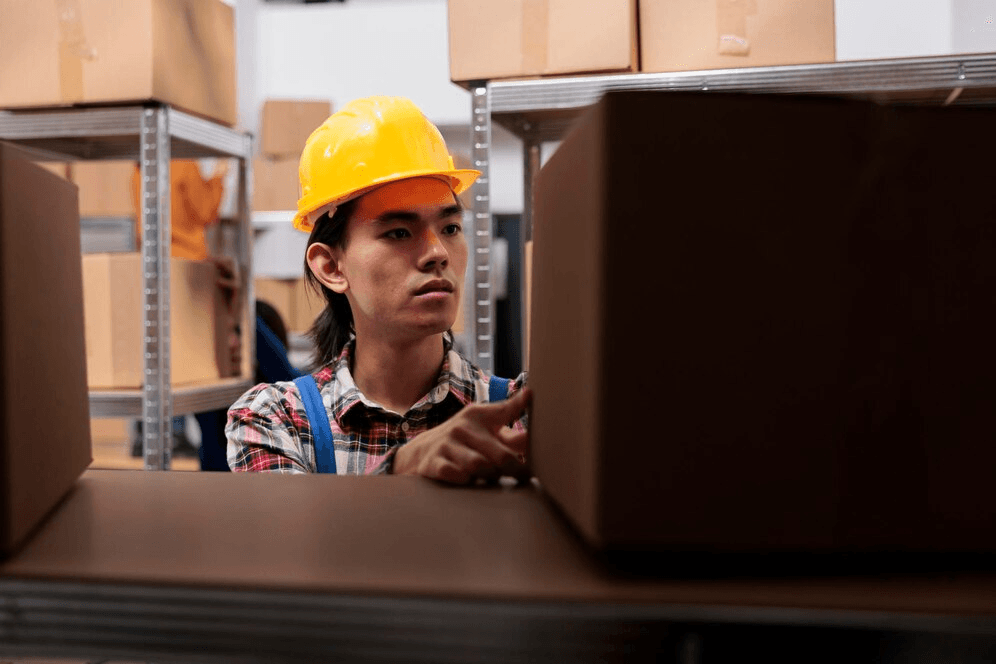
Image: Freepik
Although it may seem straightforward on the surface, behind the scenes freight forwarding involves a complex process that must be carefully planned, organized, and executed — from the moment goods are collected to the moment they arrive at their destination.
The key stages in the freight forwarding workflow are as follows:
- Order Placement and Preparation
Everything begins with the customer's order. The customer provides detailed information about the shipment, including the pickup location and the delivery address. The freight forwarder then recommends the most optimal route, advises on the appropriate mode of transport, and determines the shipping cost.
- Pickup and Packaging
Goods are collected from their location. The pickup point typically follows the company's setup — this may be a factory, warehouse, office, plantation, or other facility. The goods are then carefully packed to prevent damage during transit.
Some shipment types also require specialized packing to ensure the safety of the cargo — such as wooden crating for sensitive machine components, cold storage for fresh produce requiring precise temperature control, anti-corrosion treatment for metal components, and more.
Read also: How to Safely Ship Medical and Laboratory Equipment
- Transportation
This is a particularly critical stage. Goods received from the shipper are transported using various modes of transport. Freight forwarders typically offer three options: land, sea, and air. The choice is tailored to the distance and the nature of the cargo.
- Monitoring and Tracking
While your goods are in transit, the freight forwarder continuously monitors the shipment throughout its journey. GPS technology is used to provide precise location data and enables rapid response if any issues arise during transit.
Shippers can also check their shipment tracking number here.
- Delivery
When the goods arrive at their destination, they are handed over to the recipient. The recipient then inspects and accepts the shipment.
- Documentation and Administration
Throughout the entire process, the freight forwarder maintains meticulous records and handles all administrative matters — including customs documentation where required.
Types of Freight Forwarding Services
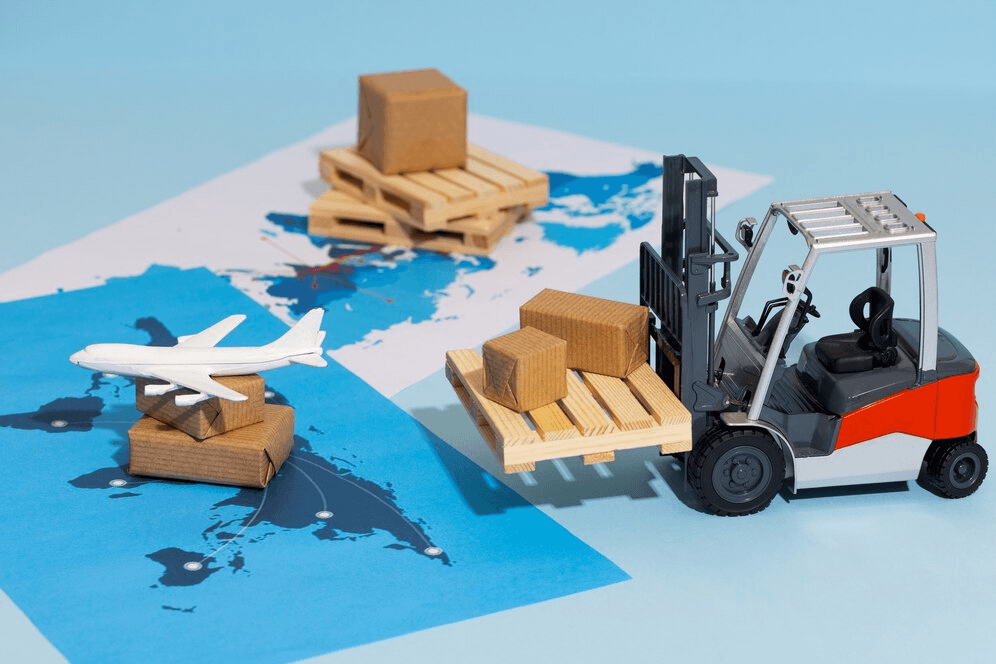
Image: Freepik
Freight forwarding services can be divided into several categories — state-owned and private. While both offer broadly similar services, the choice of provider is usually guided by the strengths of each individual company.
Meanwhile, based on mode of transport, transit time, and cargo capacity — as discussed above — freight forwarding is classified into several types:
Sea Freight
Sea freight is the preferred option when your company needs to ship goods between islands.
Sea freight is notably cost-effective, and it can also accommodate large volumes and heavy cargo in a single shipment. Typically, this type of shipment makes use of containers loaded onto ocean-going vessels.
Although transit times are somewhat longer, sea freight remains a strong option for large-scale shipments.
Another advantage of sea freight is its ability to carry a wide variety of cargo — from industrial raw materials to heavy machinery.
It is also covered by cargo insurance to protect your goods throughout the journey.
Air Freight
Freight forwarding can also utilize air transport for shipping. This is ideal when you require very fast delivery for inter-island or inter-city routes.
In terms of cost, air freight rates are generally higher compared to sea freight.
However, if speed and precision are priorities for your shipment, this mode is highly suitable — especially when your company needs to make an urgent delivery or when the cargo requires special handling.
Land Freight
Land freight is the most popular choice for cargo delivery.
Many freight forwarders and logistics companies offer services using this mode.
Why is land freight so widely preferred? Primarily because the shipping process is more straightforward and relatively safe, and cargo can be easily monitored throughout transit.
Land freight also offers more flexible routing and easier access to a wider range of destinations.
In addition, it provides a diverse fleet — from motorcycles for fast urban deliveries to large trucks for mass inter-provincial transportation.
Land freight also comes with door-to-door service for customer convenience, along with value-added options such as wooden crating for electronics and shipment insurance for maximum protection.
What Is the Difference Between a Courier, Logistics, and a Freight Forwarder?
Many people still struggle to distinguish between a courier, logistics, and a freight forwarder.
It is true that all three operate in the cargo and delivery space. However, there are key differences among the three services.
Courier
A courier is a professional assigned the responsibility of picking up and delivering goods directly from one point to another, quickly and on demand.
Couriers typically use motorcycles or cars and are tasked with delivering small-scale, local shipments.
In Indonesia, couriers can be categorized based on service speed: regular courier, express courier, same-day courier, and specialist courier. In general, couriers operate within a limited area — typically within the same city or a specific region.
Logistics
Logistics has several definitions, but referring to the KBBI, logistics is defined as the procurement, maintenance, distribution, and provision (for replacement) of equipment, supplies, and manpower.
In the context of cargo delivery, logistics encompasses the full range of processes involved in planning, execution, inventory management, and warehousing of goods from the point of origin (the producer) to the final destination (the customer).
The goal of logistics is to deliver goods to customers efficiently — on time, in the right condition, and at minimal cost and risk.
Read also: An Explanation of Logistics Distribution here.
Freight Forwarder
A freight forwarder is a company or agent that provides large-scale cargo transportation and delivery services from one location to another, with shipments carried out via multiple modes — including sea, air, and land.
A freight forwarding company acts as an intermediary between the shipper (producer) and the recipient (customer or distributor). It is also responsible for the entire shipment process — covering transportation, administration, and customs clearance where applicable.
In summary, the key difference between a courier, logistics provider, and freight forwarder lies in their roles, coverage, and scale of operations.
A courier focuses on small-scale, local delivery within a short timeframe.
Logistics encompasses the comprehensive management of goods movement and storage on a broader scale.
A freight forwarder acts as an intermediary between shipper and recipient, operating at a larger scale.
Conclusion
Freight forwarding plays a vital role in keeping business operations and cargo shipments running smoothly. By understanding the types of services available and knowing how to choose the right freight forwarder, you can optimize your company's shipping process.
For shipping consultations and further information, contact ABC Express here.