
Cargo · June 3, 2026
9 Classifications of Dangerous Goods in Logistics
This article covers goods classified as hazardous that require special handling during the shipping process.
Dangerous goods, or dangerous goods, are materials or items that can potentially endanger human health and safety, infrastructure, and means of transport if not handled correctly.
If you wish to ship dangerous goods, the transportation of these items is governed by various national and international regulations to ensure safety throughout the transport process.
This article will cover the Regulations for shipping dangerous goods along with their classifications.
What Are the Regulations for Shipping Dangerous Goods
Image: Freepik
The key regulations that serve as references for shipping dangerous goods are governed by:
- United Nations Recommendations on the Transport of Dangerous Goods: Guidelines developed by the United Nations (UN) for the transport of dangerous goods.
- International Civil Aviation Organization (ICAO) Technical Instructions: Technical rules governing the transport of dangerous goods by air.
- International Air Transport Association (IATA) Dangerous Goods Regulations: Regulations issued by IATA for the transport of dangerous goods by air.
- International Maritime Dangerous Goods (IMDG) Code: The international code governing the transport of dangerous goods by sea.
These regulations govern the handling, packaging, labelling, and transportation of dangerous goods, and provide a comprehensive risk classification system.
Classification of Dangerous Goods
Dangerous goods are classified into nine classes based on the type of hazard they present:
Class 1 - Explosives
Explosives are materials or items capable of rapidly burning or detonating as a result of a chemical reaction.
Please contact ABC Express if you wish to ship dangerous goods.
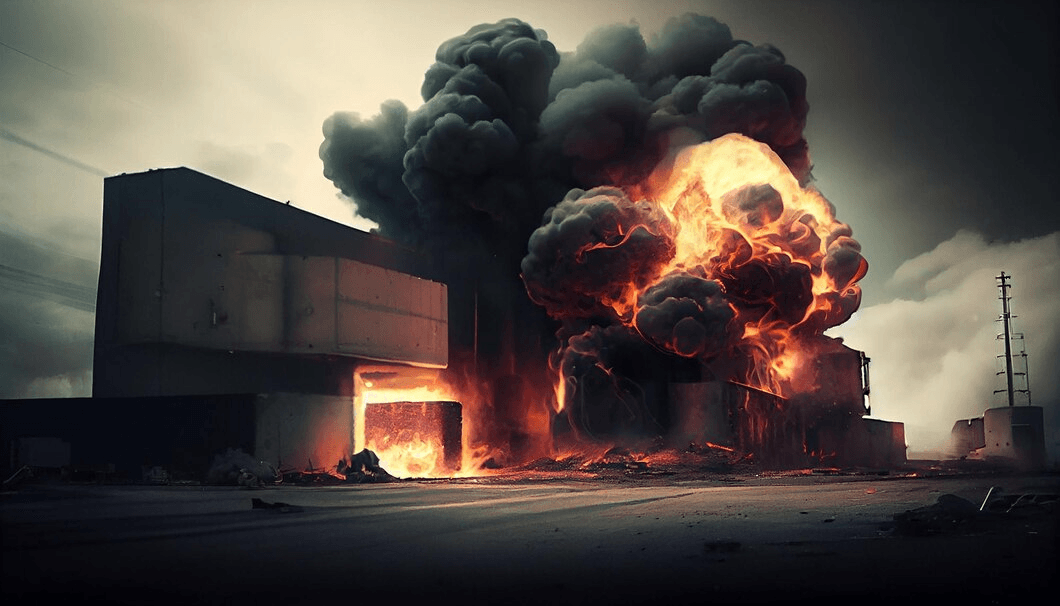
Image: Freepik
Why Are Explosives Dangerous?
Explosives are capable of producing, through chemical reactions, gases at temperatures, pressures, and speeds that can cause damage through force, and/or generate quantities of heat, light, sound, gas, or smoke that are hazardous.
Sub-Divisions
- Division 1.1: Substances and articles with a mass explosion hazard
- Division 1.2: Substances and articles with a projection hazard but not a mass explosion hazard
- Division 1.3: Substances and articles with a fire hazard and either a minor blast hazard, a minor projection hazard, or both
- Division 1.4: Substances and articles presenting no significant hazard; only a minor risk in the event of ignition or initiation during transport, with effects largely confined to the package
- Division 1.5: Very insensitive substances with a mass explosion hazard
- Division 1.6: Extremely insensitive articles without a mass explosion hazard
Commonly Shipped Explosives
Ammunition/bullets, Fireworks/pyrotechnics, Flares, Detonator caps/igniters, Fuses, Primers, Explosive charges (blasting, demolition, etc.), Detonating cord, Airbag inflators, Igniters, Rockets, TNT / TNT compositions, RDX / RDX compositions, PETN / PETN compositions.
Class 2 - Gases / Flammable Gases
Gas is defined by dangerous goods regulations as a substance with a vapour pressure greater than 300 kPa at 50°C, or one that is completely gaseous at 20°C at standard atmospheric pressure, as well as articles containing such substances. This class includes compressed gases, liquefied gases, dissolved gases, refrigerated liquefied gases, mixtures of one or more gases with one or more vapours of substances from other classes, articles charged with a gas, and aerosols.
ABC Express is experienced in handling gases, Class 2 Dangerous Goods. ABC Express has the capability to serve all customer requests related to gas logistics; packaging, packing, compliance, freight forwarding, and training.
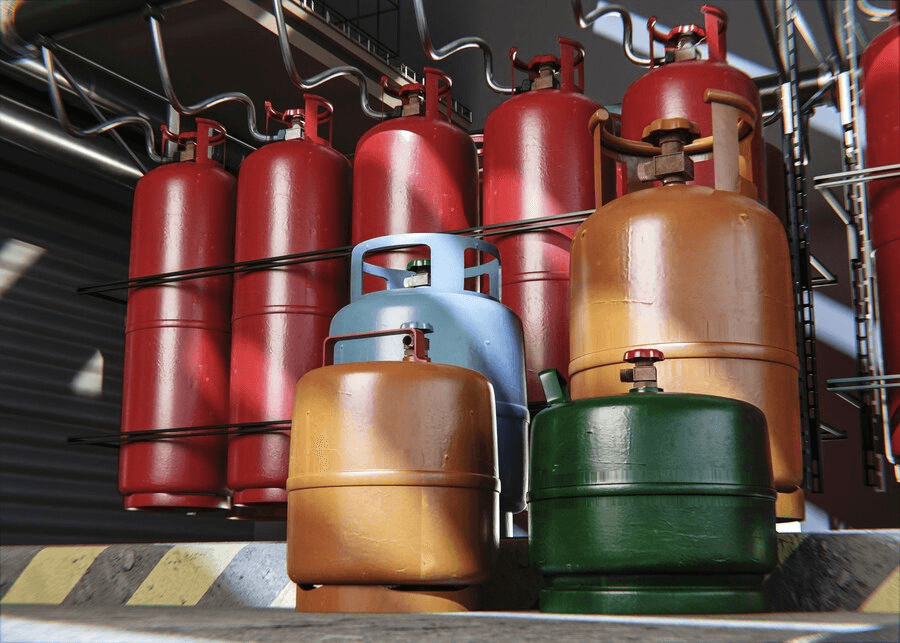
Image: Freepik
Why Are Flammable Gases Dangerous?
Gases can pose serious hazards due to their flammability, potential as asphyxiants, oxidising properties, and/or toxicity or corrosivity to humans.
Sub-Divisions
- Division 2.1: Flammable gases
- Division 2.2: Non-flammable, non-toxic gases
- Division 2.3: Toxic gases
Commonly Shipped Flammable Gases
Aerosols, Compressed air, Hydrocarbon gas-powered devices, Fire extinguishers, Gas cartridges, Fertiliser ammoniation solutions, Insecticide gases, Refrigerant gases, Lighters, Acetylene / Oxyacetylene, Carbon dioxide, Helium / helium compounds, Hydrogen / hydrogen compounds, Oxygen / oxygen compounds, Nitrogen / nitrogen compounds, Natural gas, Oil gas, Petroleum gas, Butane, Propane, Ethane, Methane, Dimethyl ether, Propene / propylene, Ethylene.
Class 3 - Flammable Liquids
Flammable liquids are defined by dangerous goods regulations as liquids.
Liquid mixtures, or liquids containing solids in solution or suspension, that give off flammable vapour (have a flash point) at temperatures of no more than 60–65°C.
Liquids offered for transport at temperatures at or above their flash point, or substances transported at elevated temperatures in a liquid state that emit flammable vapours at or below the maximum transport temperature.

Image: Freepik
If you wish to ship flammable liquids, ABC Express can assist with the entire shipping process, from packaging to flammable goods shipping training.
Read also: Guide to Shipping Dangerous Goods
Why Are Flammable Liquids Dangerous?
Flammable liquids can pose serious hazards due to their volatility, combustibility, and potential to cause or spread severe fires.
Sub-Divisions
There are no sub-divisions within Class 3, Flammable Liquids.
Commonly Shipped Flammable Liquids
Acetone / acetone oil, Adhesives, Paint / lacquer / varnish, Alcohol, Perfume products, Petrol, Diesel fuel, Aviation fuel, Bio-liquid fuel, Coal tar / coal tar distillates, Crude petroleum oil, Petroleum distillates, Gas oil, Shale oil, Heating oil, Kerosene, Resins, Tar, Turpentine, Carbamate insecticides, Organochlorine pesticides, Organophosphorus pesticides, Copper-based pesticides, Esters, Ethers, Ethanol, Benzene, Butanol, Dichloropropene, Diethyl ether, Isobutanol, Isopropyl, Methanol, Octane.
Class 4 - Flammable Solids; Substances Liable to Spontaneous Combustion; Substances Dangerous When Wet
Flammable solids are substances that, under conditions encountered during transport, are readily combustible or may cause or contribute to fire through friction, self-reactive substances that tend to undergo a strongly exothermic reaction, or desensitised explosives. Also included are substances liable to spontaneous heating under normal transport conditions, or heating on contact with air, and thus likely to catch fire, and substances that emit flammable gases or become spontaneously flammable on contact with water.
Contact ABC Express to ship flammable solids, Class 4 Dangerous Goods.
Why Are Flammable Solids Dangerous?
Flammable solids can pose serious hazards due to their volatility, combustibility, and potential to cause or spread severe fires.
Sub-Divisions
- Division 4.1: Flammable solids
- Division 4.2: Substances liable to spontaneous combustion
- Division 4.3: Substances that, in contact with water, emit flammable gases
Commonly Shipped Flammable Solids; Substances Liable to Spontaneous Combustion; Substances Dangerous When Wet
Alkali metals, Metal powders, Aluminium phosphide, Sodium batteries, Sodium cells, Fire lighters, Matches, Calcium carbide, Camphor, Carbon, Activated carbon, Celluloid, Cerium, Copra, Seed cake, Oily cotton waste, Desensitised explosives, Oily fabrics, Oily fibres, Ferrocerium, Iron oxide (spent), Sponge iron / directly reduced iron (spent), Metaldehyde, Naphthalene, Nitrocellulose, Phosphorus, Sulphur.
Class 5 - Oxidising Substances; Organic Peroxides
Oxidising substances are defined by dangerous goods regulations as substances that may cause or contribute to combustion, generally by yielding oxygen as a result of a redox chemical reaction. Organic peroxides are substances that can be considered derivatives of hydrogen peroxide in which one or both of the hydrogen atoms in the chemical structure have been replaced by organic radicals.

Image: Freepik
You can enquire further with ABC Express to ship oxidising substances and organic peroxides.
Why Are Oxidising Substances Dangerous?
Oxidising substances, while not always flammable in themselves, can produce oxygen and thereby cause or contribute to the combustion of other materials. Organic peroxides are thermally unstable and may release heat during exothermic oxidative decomposition. Additionally, organic peroxides may be susceptible to explosive decomposition, burn rapidly, be sensitive to impact or friction, react dangerously with other substances, or cause damage to eyes.
Sub-Divisions
- Division 5.1: Oxidising substances
- Division 5.1: Organic peroxides
Commonly Shipped Oxidising Substances / Organic Peroxides
Chemical oxygen generators, Ammonium nitrate fertilisers, Chlorates, Nitrates, Nitrites, Perchlorates, Permanganates, Persulphates, Aluminium nitrate, Ammonium dichromate, Ammonium nitrate, Ammonium persulphate, Calcium hypochlorite, Calcium nitrate, Calcium peroxide, Hydrogen peroxide, Magnesium peroxide, Lead nitrate, Lithium hypochlorite, Potassium chlorate, Potassium nitrate, Potassium perchlorate, Potassium permanganate, Sodium nitrate, Sodium persulphate.
Class 6 - Toxic Substances; Infectious Substances
Toxic substances are substances capable of causing death or serious injury, or of harming human health, if swallowed, inhaled, or through skin contact. Infectious substances are substances known or reasonably expected to contain pathogens. Dangerous goods regulations define pathogens as microorganisms, such as bacteria, viruses, rickettsiae, parasites, and fungi, or other agents capable of causing disease in humans or animals.

Image: Freepik
You can partner with ABC Express to ship toxic substances safely.
Read also: Safe Tips for Shipping Car Spare Parts Across Indonesia
Why Are Toxic & Infectious Substances Dangerous?
Toxic and infectious substances can pose significant risks to human and animal health upon contact.
Sub-Divisions
- Division 6.1: Toxic substances
- Division 6.2: Infectious substances
Commonly Shipped Toxic and Infectious Substances
Medical / biomedical waste, Clinical waste, Biological cultures / samples / specimens, Medical cultures / samples / specimens, Tear gas substances, Motor fuel anti-knock mixtures, Dyes, Carbamate pesticides, Alkaloids, Allyl compounds, Acids, Arsenates, Arsenites, Cyanides, Thiols / mercaptans, Cresols, Barium compounds, Arsenic / arsenic compounds, Beryllium / beryllium compounds, Lead compounds, Mercury compounds, Nicotine / nicotine compounds, Selenium compounds, Antimony, Ammonium metavanadate, Adiponitrile, Chloroform, Dichloromethane, Hexachlorophene, Phenol, Resorcinol.
Class 7 - Radioactive Materials
Dangerous goods regulations define radioactive material as any material containing radionuclides where both the activity concentration and the total activity exceed pre-defined values. Radionuclides are atoms with an unstable nucleus that therefore undergo radioactive decay.

Image: Freepik
Please contact ABC Express Cargo for further consultation if you wish to ship radioactive materials.
Why Are Radioactive Materials Dangerous?
During radioactive decay, radionuclides emit ionising radiation, which poses serious potential risks to human health.
Sub-Divisions
There are no sub-divisions within Class 7, Radioactive Materials.
Commonly Shipped Radioactive Materials
Radioactive ores, Medical isotopes, Yellowcake, Density gauges, Mixed fission products, Surface-contaminated objects, Caesium radionuclides/isotopes, Iridium radionuclides/isotopes, Americium radionuclides/isotopes, Plutonium radionuclides/isotopes, Radium radionuclides/isotopes, Thorium radionuclides/isotopes, Uranium radionuclides/isotopes, Depleted uranium / depleted uranium products, Uranium hexafluoride, Enriched uranium.
Class 8 - Corrosive Substances
Corrosive substances are substances that, by chemical action, damage or destroy other materials upon contact.
ABC Express has expertise in handling corrosive substances, Class 8 Dangerous Goods. ABC Express has the capability to serve all customer requests related to corrosive substance logistics; packaging, packing, compliance, freight forwarding, and training.
Why Are Corrosive Substances Dangerous?
Corrosive substances cause severe damage upon contact with living tissue or, in the event of a spill, damage or destroy surrounding materials.
Sub-Divisions
There are no sub-divisions within Class 8, Corrosive Substances.
Commonly Shipped Corrosive Substances
Acids / acid solutions, Batteries, Battery fluid, Fuel cell cartridges, Dyes, Fire extinguisher charges, Formaldehyde, Flux, Paint, Alkylphenols, Amines, Polyamines, Sulphides, Polysulphides, Chlorides, Chlorosilanes, Bromine, Cyclohexylamine, Phenol / carbolic acid, Hydrofluoric acid, Hydrochloric acid, Sulphuric acid, Nitric acid, Sludge acid, Hydrogen fluoride acid, Iodine, Morpholine.
Class 9 - Miscellaneous Dangerous Goods
Miscellaneous dangerous goods are substances and articles that, during transport, present a hazard or risk not covered by other classes. This class includes, but is not limited to, environmentally hazardous substances, substances transported at elevated temperatures, miscellaneous articles and substances, genetically modified organisms and micro-organisms, and (depending on the method of transport) magnetised materials and substances regulated in aviation.
ABC Express has expertise in handling miscellaneous dangerous goods, Class 9 Dangerous Goods. ABC Express has the capability to serve all customer requests related to miscellaneous dangerous goods logistics; packaging, packing, compliance, freight forwarding, and training.
Why Are They Classified as Dangerous?
Miscellaneous dangerous goods present a variety of potential hazards to human health and safety, infrastructure, and/or means of transport.
Sub-Divisions
There are no sub-divisions within Class 9, Miscellaneous Dangerous Goods.
Read also: 5 Safe Ways to Pack Fragile Items
Commonly Shipped Miscellaneous Dangerous Goods
Dry ice / solid carbon dioxide, Expandable polymer beads / polystyrene beads, Ammonium nitrate fertilisers, Blue asbestos / crocidolite, Lithium-ion batteries, Lithium metal batteries, Battery-powered equipment, Battery-powered vehicles, Fuel cell engines, Internal combustion engines, Vehicles, Magnetised materials, Dangerous goods in apparatus, Dangerous goods in machinery, Genetically modified organisms, Genetically modified micro-organisms, Chemical kits, First aid kits, Life-saving appliances, Airbag modules, Seatbelt pre-tensioners, Plastic moulding compounds, Castor bean plant products, Polychlorinated biphenyls, Polychlorinated terphenyls, Dibromodifluoromethane, Benzaldehyde.
Dangerous Goods Handling & Shipping by ABC Express
ABC Express is a cargo shipping partner with ISO, AEO, and IATA certifications and 10 years of experience.
Our extensive experience in shipping dangerous goods demonstrates ABC Express's compliance with the strict regulations governing dangerous goods handling, in accordance with all applicable health and quality risk mitigation standards.
If you need to transport dangerous goods to other cities or internationally, use our Air Freight and Sea Freight solutions to meet your shipping needs. We are experts who will provide the best solution for transporting your dangerous goods. Contact us for more information.
Shipping dangerous goods is now easier than ever, as you can order trucks online. Simply contact an ABC Express assistant and you can immediately book the type of fleet you need via WhatsApp.
Contact ABC Express — our team is ready and willing to answer any questions you may have and ship your goods.
Explore ABC Express Services in full!