
Cargo · June 3, 2026
FTL vs LTL Shipping: Differences in Cargo Distribution
Shipping goods by truck is divided into 2 services: FTL (Full Truckload) and LTL (Less Than Truckload). What are the differences and which option should you choose? Read more!
Cargo shipping is not just loading and unloading at the origin and destination.
Cargo shipping includes selecting shipping routes (air, land, or sea), transportation mode, suitable shipping vendors, and various other factors to ensure timely and cost-effective shipping.
However, the full-truck or Full Truckload (FTL) shipping method is now outdated.
Because of this, a new shipping method was introduced in the 1980s: LTL as an alternative to Full Truckload shipping.
Full Truckload is a 'traditional' shipping method.
This shipping requires the shipper to rent an entire truck. Unlike Full Truckload, LTL (or Less-Than-Truckload) is a shipping method where the shipper can rent part of a truck.
The question is, which method should be chosen—FTL or LTL?
LTL and FTL
Less-Than-Truckload is the shipping of various goods by multiple shippers in one truck.
Less-Than-Truckload is the right choice for shipping between one and six pallets or any shipment less than 5 meters.
Full Truckload refers to full truck transportation. FTL shipping is typically used for large shipments that require the entire truck space.
With Full Truckload shipping, cargo is delivered exclusively, where the only goods loaded in one truck come from one shipper.
The shipper can order a truck with full capacity even if it is not fully filled during shipping. With this method, the shipper does not need to worry that the shipment will be mixed with other goods.
Differences Between LTL and FTL
The difference between LTL and FTL lies in cost.
LTL shipping will be more economical if the shipper only sends a few pallets in one shipment. This option is cheaper because the shipper only pays for the space used, rather than paying for a full truck that is not completely filled.
LTL vendors maintain shipping efficiency by filling excess space with other shipments, allowing vendors to maximize the space available in their trucks.
LTL and FTL have major differences in terms of transit time.
With Full Truckload shipping, the vendor will load the shipment and deliver it directly to the recipient—so the transit point and time can be predicted.
However, LTL transit is not direct to the end-user because there are multiple different stop points.
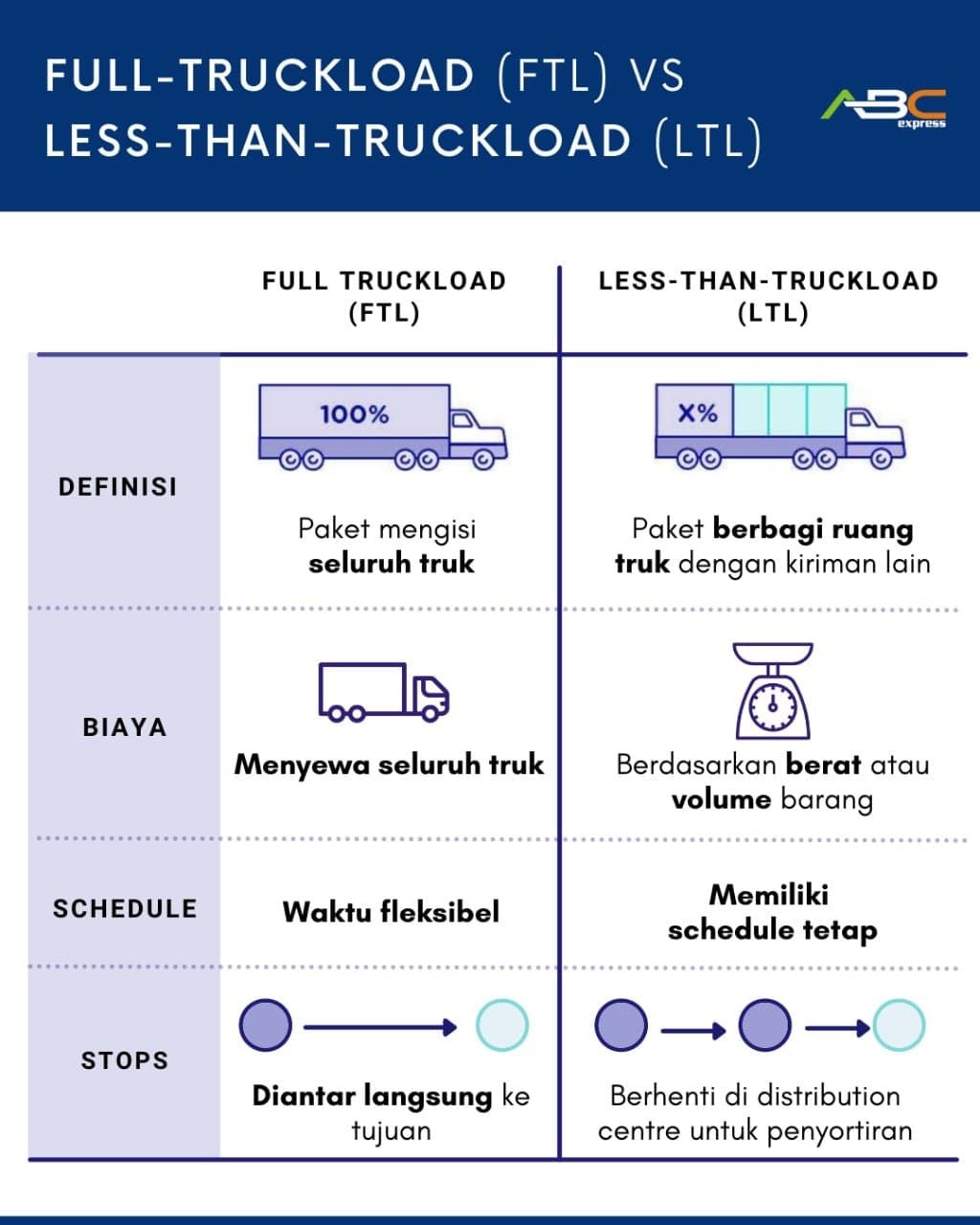
4 Main Differences Between Full Truckload and LTL
The main advantage of LTL is cost savings. If you only send a few pallets, it's usually cheaper to use Less-Than-Truckload than to pay for Full Truckload.
1. LTL Involves Multiple Parties
Full Truckload: The shipper loads the product at the origin, seals the trailer, and the driver takes the product directly to the destination for delivery.
Less-Than-Truckload: Throughout the shipping, the product will be loaded and unloaded from the trailer and warehouse multiple times before reaching the final destination.
Although most LTL shipments are delivered in perfect condition, the more handling means the greater the potential for product damage.
It is very important to properly pack and protect products for LTL shipping.
2. Shippers Need to Know Freight Class
Full Truckload: Vendors do not pay much attention to commodity specifications regarding pricing.
Less-Than-Truckload: Different commodities may have slightly different rates, even for the same shipping route with the same number of pallets. It all depends on the freight class.
3. Products Are Weighed to Ensure Accuracy
Full Truckload: After loading, the driver can stop at a weighing station to verify that the truck is below the legal limit of 3.5 tons.
Less-Than-Truckload: The vendor will recheck the product after it arrives at the shipping origin. The package will be measured for dimensions and weight.
If the measurement results differ from the product specifications listed on the bill of lading, the LTL vendor will reclassify the shipment, which may result in an updated rate.
4. Transit Is Not Direct
Full Truckload: The driver picks up the product from the shipper and delivers it directly to the recipient.
Less-Than-Truckload: The driver makes multiple transfers, which usually takes longer than Full Truckload.
How to Optimize Your Choice: LTL vs. FTL
In some cases, shippers should use the Less-Than-Truckload or Full Truckload option.
There are no fixed rules to follow, however, there are certain situations where Full Truckload shipping may be more appropriate than Less-Than-Truckload.
If you will be shipping more than six pallets at once, then the Full Truckload option will be the best.
If the product is fragile and needs to avoid excessive loading and unloading, the Full Truckload option will be the best choice because the shipper knows that the fragile product is the only item in that truck.
If you need a definite shipping and pickup date, the Full Truckload option will be better because the shipper can order one truck to transport those goods.
For time-sensitive shipping dates, shippers should seriously consider the Full Truckload option.
If the shipper has shipments of less than six pallets, it will be more economical to use the Less-Than-Truckload method.
If the shipper has flexibility on shipping dates, the Less-Than-Truckload option will also be much more suitable.
It is also important to know the potential for product damage during shipping. The shipper must ensure that the shipment is strong enough for regular handling during the shipping process.
Another difference is that with Full Truckload, the product will be loaded at the origin point, the trailer will be sealed, and it will be taken directly to the shipping destination.
With Less-Than-Truckload shipping, products are usually loaded and unloaded from the trailer and warehouse multiple times before reaching their final destination.
The higher the handling and exposure, the greater the product can suffer damage, especially if it is sensitive or fragile.
Similarities Between FTL and LTL
Full truckload and LTL have several similar characteristics:
- Both move goods by road, although some LTL operators will use rail shipping.
- Both use Class 8 tractors (semi trucks).
- Both require professional drivers with a commercial driver's license (CDL).
- Both modes primarily ship goods using pallets.
Read more: Understanding LTL Cargo Shipping [Less Than Truckload]
Conclusion
LTL shipping is an economical and efficient way to ship goods of relatively smaller size.
If you will be shipping 6 pallets or fewer, consider looking at the LTL option.
Understanding these main differences will help shippers use the LTL or FTL strategy.
4 Main Things to Know When Shipping LTL Vs FTL:
- Shipments will be handled more.
- Freight class determines your price.
- Make sure you apply the correct class and dimensions.
- Transit takes longer and is not guaranteed.
Still hesitant about choosing FTL or LTL shipping? You can get advisor assistance.
ABC Express has been a trusted advisor to hundreds of companies such as ASBA, Street Boba, and AirNav Indonesia. The way we do this is by formulating & recommending several route options and transportation modes that suit your needs & event objectives.
You don't need to be confused making decisions on your own.
Consult your best shipping with ABC Express or Get special shipping quotes today!